Most practitioners treating SIBO and neuroinflammation simultaneously make the same sequencing error: they treat both conditions in parallel, then wonder why neither resolves. The gut-brain axis is bidirectional, but the clinical intervention sequence is not. Getting the order wrong doesn't just slow progress — it can actively worsen the condition you're trying to treat second.
This is a core principle in the clinical training offered by Dr. Datis Kharrazian and the Kharrazian Institute. When two interconnected systems are both dysfunctional, the sequence of intervention determines the outcome. Understanding why — mechanistically — is what separates practitioners who get results from those who get partial responses.
Why Treating SIBO and Neuroinflammation Simultaneously Often Fails
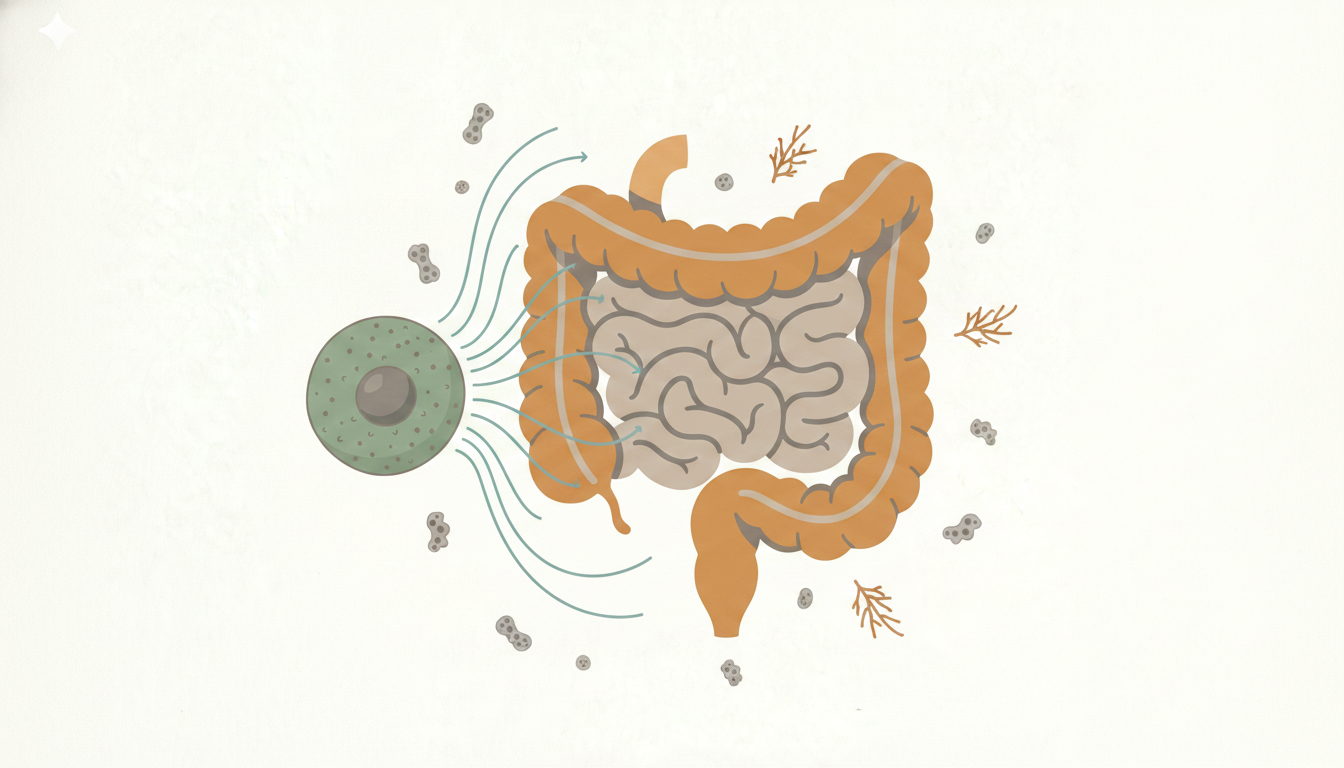
The gut and the brain communicate through multiple pathways: the vagus nerve, the enteric nervous system, circulating cytokines, microbial metabolites, and short-chain fatty acids. When SIBO is present, bacterial overgrowth in the small intestine generates lipopolysaccharide (LPS) and other endotoxins that cross the intestinal barrier and enter systemic circulation. From there, they cross the blood-brain barrier and activate microglia — the brain's resident immune cells.
Microglial activation is the cellular basis of neuroinflammation. Once activated, microglia produce pro-inflammatory cytokines that further sensitize the brain's immune response. The problem with treating neuroinflammation while SIBO is still active is straightforward: the upstream driver of microglial activation remains in place. You can use every neuroprotective compound available, but if LPS continues flooding the systemic circulation, you are managing a fire while leaving the gas on.
Research in neuroimmunology demonstrates that peripheral immune activation — including gut-derived endotoxemia — is a primary driver of central neuroinflammation. Dr. Kharrazian's clinical training emphasizes this upstream-downstream relationship as one of the most commonly missed sequencing errors in functional medicine practice.
Stabilizing the Gut First: What That Actually Means Clinically
Stabilizing gut health before addressing neuroinflammation directly is not simply a matter of prescribing a SIBO protocol and moving on. There are three distinct phases that need to occur before the gut can be considered stable enough to shift clinical focus toward the brain.
The first phase is identifying and removing the upstream cause of SIBO. SIBO is rarely a primary condition. It develops secondary to impaired motility, low stomach acid, structural dysfunction, vagal tone dysregulation, or immune compromise. Treating bacterial overgrowth without addressing its driver produces recurrence. In patients with concurrent neuroinflammation, vagal tone dysregulation is a particularly common upstream factor — which is itself influenced by brain inflammation. This is where the clinical picture becomes genuinely complex.
The second phase is reducing intestinal permeability. Bacterial overgrowth disrupts the tight junctions of the intestinal epithelium, allowing not just LPS but food-derived antigens and partially digested proteins to enter circulation. Research in gastroenterology and immunology consistently links intestinal permeability to systemic and central immune activation. Until permeability is reduced, systemic inflammatory load remains elevated regardless of what is being done for the brain.
The third phase is confirming reduced systemic inflammatory burden before layering in neuroinflammation-specific interventions. Clinical markers — including inflammatory cytokines, LPS-binding protein, and intestinal permeability markers — provide objective confirmation that the gut is no longer the dominant driver of neuroinflammation. Without this confirmation, neuroinflammatory treatment is being applied to a moving target.
How Neuroinflammation Complicates SIBO Treatment
The sequencing argument is not simply "gut first, brain second." Neuroinflammation creates its own barriers to gut recovery that practitioners need to account for throughout the process.
Vagal nerve tone is the primary regulator of the migrating motor complex (MMC) — the intestinal contracting pattern that sweeps residual bacteria from the small intestine between meals. Impaired MMC function is one of the most established mechanisms behind SIBO development and recurrence. Neuroinflammation degrades vagal nerve signaling. A patient with significant neuroinflammation will have impaired gut motility not because of a primary gut condition but because of compromised autonomic output from the brainstem.
In these patients, addressing SIBO without any concurrent support for vagal function and brainstem health leads to the same outcome as the parallel-treatment error: incomplete resolution and rapid recurrence. Dr. Kharrazian's clinical coursework addresses vagal tone assessment and brainstem rehabilitation as components of the SIBO management strategy in neurocompromised patients — not as separate tracks, but as integrated elements of gut motility restoration.
This is the nuance that makes the gut-first principle more sophisticated than it sounds. "Gut first" does not mean ignore the brain entirely during the gut phase. It means direct therapeutic resources at the gut as the primary target while providing enough neurological support to allow gut healing to proceed.
Dietary Strategy During Combined Gut-Brain Treatment
Dietary intervention during this sequencing process serves two purposes simultaneously, which makes food choices during treatment more constrained than in single-system cases.
SIBO management typically involves reducing fermentable carbohydrates that feed bacterial overgrowth — a low-FODMAP, Specific Carbohydrate Diet, or similar approach. Neuroinflammation management benefits from an anti-inflammatory dietary base that removes common immune triggers and supports microglial resolution. These two goals have significant overlap, but not complete overlap.
Fermented foods, for instance, are commonly recommended for gut dysbiosis. In active SIBO with concurrent neuroinflammation and histamine sensitivity — a combination that occurs with clinical regularity — fermented foods can worsen both gut symptoms and brain symptoms simultaneously. Histamine intolerance in the context of SIBO is a well-documented phenomenon, and histamine crosses the blood-brain barrier, where it activates neuroinflammatory cascades.
An autoimmune-compatible, low-FODMAP dietary base that eliminates common food sensitivities addresses both systems simultaneously without inadvertently driving either condition. This is not a permanent dietary structure — it is a stabilization strategy appropriate to the early phases of combined treatment.
When to Shift Clinical Focus to Neuroinflammation Directly
The transition point from gut-primary to brain-primary intervention is clinical, not calendar-based. Practitioners who use a fixed timeline — "treat SIBO for eight weeks, then shift to the brain" — are using a proxy for clinical decision-making rather than the clinical data itself.
The objective markers that signal readiness for direct neuroinflammatory intervention include: documented reduction in intestinal permeability markers, reduced systemic inflammatory burden on relevant labs, resolution or significant reduction in acute SIBO symptoms, and demonstrable improvement in gut motility. Subjectively, the patient's cognitive and neurological symptoms often begin to improve as gut inflammation reduces — this is a reliable clinical sign that systemic LPS burden is decreasing.
When these markers shift, direct neuroinflammatory intervention becomes viable. This includes targeted use of compounds that support microglial resolution, blood-brain barrier integrity, and neurological antioxidant capacity — luteolin, palmitoylethanolamide (PEA), lion's mane, and high-dose omega-3 fatty acids among the evidence-supported options. Research in neuroimmunology supports several of these compounds for microglial modulation, a body of evidence Dr. Kharrazian's clinical education synthesizes for direct practitioner application.
Continuous Reassessment as a Clinical Requirement
In patients managing both SIBO and neuroinflammation, treatment response is not linear. Autoimmune involvement, immune dysregulation, environmental exposures, and stress-mediated cortisol fluctuations can all shift the clinical picture between appointments. Reassessment is not a courtesy — it is a structural requirement of the treatment process.
If SIBO interventions are producing expected improvement in gut symptoms but neurological symptoms are worsening, the evaluation should include: new or worsening intestinal permeability, a concurrent immune trigger outside the gut (mold, heavy metals, food antigens), or a stress-mediated autonomic shift that is compromising both gut motility and blood-brain barrier integrity. None of these require starting over — they require recalibrating which layer of the system needs the next intervention.
Dr. Kharrazian's clinical training addresses this recalibration process as an ongoing sequence of thought rather than a fixed protocol. The variables are too numerous and too patient-specific for a single treatment map to hold across all presentations.
Key Clinical Takeaways
- Treating SIBO and neuroinflammation in parallel without sequencing typically results in partial resolution of both. Gut-derived LPS is a primary driver of microglial activation and must be reduced before neuroinflammatory interventions reach their potential.
- Neuroinflammation impairs vagal nerve tone, which impairs gut motility and drives SIBO recurrence. Brainstem and vagal support during the gut phase is not optional in neurocompromised patients.
- The transition from gut-primary to brain-primary intervention should be driven by objective clinical markers, not a fixed timeline.
- Histamine sensitivity is a clinically common complicating variable in combined SIBO and neuroinflammation cases. Dietary strategy must account for it.
- Continuous reassessment between appointments is a structural requirement, not supplemental care. The clinical picture in multi-system cases shifts faster than in single-system presentations.
Frequently Asked Questions
Yes. Bacterial overgrowth in the small intestine generates endotoxins including LPS, which cross the intestinal barrier and enter systemic circulation. Research in neuroimmunology demonstrates that circulating LPS crosses the blood-brain barrier and activates microglia, the cellular mechanism of neuroinflammation.
The evidence-based approach prioritizes gut stabilization first: identify and address the upstream driver of SIBO, reduce intestinal permeability, and confirm reduced systemic inflammatory burden. Direct neuroinflammatory intervention becomes the primary focus once gut-derived immune activation is no longer the dominant driver.
Recurrence almost always indicates an unresolved upstream driver. Impaired gut motility from vagal tone dysregulation, low stomach acid, structural factors, or ongoing immune dysregulation are common causes. In patients with neuroinflammation, brainstem-mediated motility impairment is a frequently missed driver of recurrent SIBO.
Neuroinflammation impairs vagal nerve output from the brainstem. The vagus nerve regulates the migrating motor complex, which is the primary mechanism that clears residual bacteria from the small intestine between meals. Degraded vagal tone means degraded motility, which creates the conditions for SIBO to develop or persist.
When objective markers confirm reduced intestinal permeability and lower systemic inflammatory burden, and when gut symptoms have meaningfully improved. Using a fixed calendar timeline rather than clinical markers as the transition trigger is a common sequencing error that reduces treatment efficacy.
About the Author
Dr. Datis Kharrazian, PhD, DHSc, DC, MS, MMSc, FACN, is a Harvard Medical School research fellow and researcher at Massachusetts General Hospital's Department of Neurology specializing in autoimmunity and neuroimmunology. He serves as Associate Clinical Professor at Loma Linda University School of Medicine and is the author of Why Do I Still Have Thyroid Symptoms When My Lab Tests Are Normal and Why Isn't My Brain Working. He is a Fellow of the American College of Nutrition, a Diplomate of the Board of Nutrition Specialists, a member of the American Association of Immunologists, and a Fellow of the Royal Society of Medicine (UK). The Kharrazian Institute provides clinical education and training to more than 5,000 physicians and healthcare providers worldwide.
Learn the complete clinical sequencing strategies for complex multi-system cases. The Kharrazian Institute offers advanced practitioner training in functional medicine, neuroimmunology, and gastrointestinal health. Visit the KI course catalog to find the program that matches your current clinical needs.