Most practitioners have seen this patient: every lab value is within range, every diagnosis has been ruled out, and the patient is still not recovering. The conventional workup found nothing wrong. The patient, however, is clearly not well.
This is where the distinction between treating a pathology and managing systemic dysfunction becomes clinically decisive. At the Kharrazian Institute, Dr. Datis Kharrazian teaches practitioners to recognize this gap — not as a limitation of medicine, but as a signal that the wrong clinical model is being applied.
What It Actually Means to Treat a Pathology
Pathology-based medicine asks: what disease does this patient have? The entire diagnostic process is organized around identifying a named condition that fits established criteria. Once identified, the treatment is directed at that condition — typically to suppress, eliminate, or manage its defining features.
This model works exceptionally well when a discrete pathology exists. Identifying a bacterial infection and prescribing the appropriate antibiotic is the model functioning as intended. Diagnosing a broken bone and setting it is the model functioning as intended. The logic is linear: identify the problem, apply the intervention, measure the resolution.
The limitation surfaces when the patient's presentation doesn't resolve into a single discrete pathology — or when the named condition is treated and the patient still doesn't improve. A diagnosis of hypothyroidism followed by thyroid hormone replacement is treating a pathology. If that patient still experiences fatigue, cognitive slowing, and poor body temperature regulation despite normalized TSH, the pathology has been addressed and the patient has not.
Systemic Dysfunction Operates by Different Rules
Systemic dysfunction doesn't require a diagnosable disease to be clinically significant. It refers to impaired physiological function across one or more interconnected systems — function that is measurably off but not yet at the threshold that qualifies as pathology under conventional criteria.
Research in functional medicine and systems biology demonstrates that physiological dysfunction precedes structural pathology in the majority of chronic conditions. The dysregulation comes first. The disease is downstream. By the time a patient meets diagnostic criteria for a condition, the underlying dysfunction has often been present for years.
This is why the systemic dysfunction model requires a different sequence of thought. The clinical question shifts from "what disease does this patient have?" to "which physiological systems are not functioning correctly, and how are they affecting each other?" That reorientation changes everything about the intake, the assessment, and the intervention logic.
How the Two Models Assess Differently
Pathology-based assessment moves toward confirmation or exclusion of specific diagnoses. Labs are ordered to rule in or rule out. The threshold between "normal" and "abnormal" is defined by population statistics, not by the individual patient's optimal function.
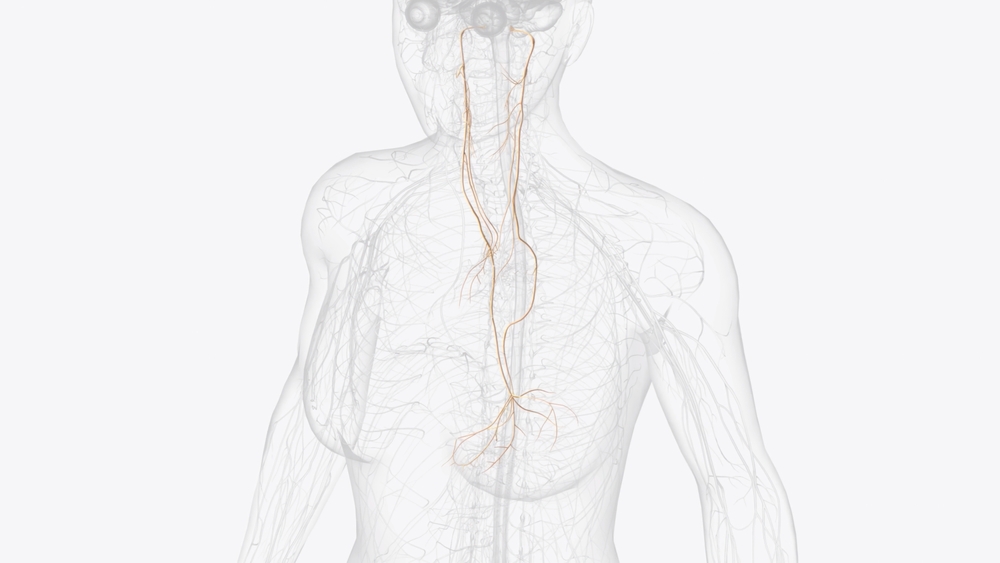
Systemic dysfunction assessment maps physiological terrain. It looks at the relationships between systems — how gut barrier integrity affects immune activation, how immune activation affects thyroid conversion, how impaired thyroid function affects liver metabolism, how liver dysfunction affects sex hormone clearance. Dr. Kharrazian's clinical training teaches practitioners to read these interconnected patterns rather than evaluate each system in isolation.
The intake tools are also different. A comprehensive metabolic assessment form, detailed history, and functional lab interpretation — evaluated against optimal rather than pathological ranges — give the clinician a picture of where function is breaking down before structural disease has declared itself. That earlier entry point is where intervention has the most leverage.
Why the Same Patient Gets Different Outcomes Under Each Model
Consider a patient presenting with fatigue, low mood, poor concentration, and irregular cycles. Under the pathology model, each symptom becomes a separate diagnostic question. The fatigue might warrant a TSH. The mood earns a depression screening tool. The cognitive complaints may go nowhere without additional criteria. The cycles prompt a gynecology referral. Each is evaluated in its own lane.
Under the systemic dysfunction model, that cluster of symptoms is a pattern that points to a shared mechanism. Functional medicine research demonstrates that hypothalamic-pituitary-adrenal axis dysregulation, intestinal permeability, chronic low-grade immune activation, and impaired mitochondrial function can all produce this exact constellation — and all influence each other. Treating each symptom in isolation leaves the underlying mechanism intact.
The practitioner trained in systemic dysfunction assessment doesn't ask which of these symptoms is the "real" problem. They ask which physiological disruptions are generating the whole picture. That question leads to a different intervention strategy — one that addresses the mechanism rather than the expression.
Clinical Priority: Where Do You Start?
One of the most practical distinctions Dr. Kharrazian's coursework addresses is clinical prioritization. When multiple systems are dysfunctional simultaneously, the order of intervention matters. Treating the wrong system first — or treating all systems at once without a logical sequence — produces inconsistent outcomes and confused patients.
Gut-immune interactions are a useful example. Research in gastroenterology and immunology consistently demonstrates that intestinal permeability drives systemic immune activation, which in turn drives neuroinflammation, disrupts endocrine signaling, and impairs detoxification. A practitioner who addresses thyroid function without addressing the intestinal permeability maintaining the immune activation driving the autoimmune thyroid attack is working against themselves. The sequence matters.
Systemic dysfunction clinical strategy requires identifying which dysfunction is upstream — which one is driving the others — and establishing an intervention order that follows that logic. This is a learnable clinical skill, and it's one the pathology-based model doesn't require, because pathology-based medicine generally doesn't ask the sequencing question.
How Outcomes Are Measured Differently
Pathology-based outcomes are defined by the pathology: is the infection cleared, is the tumor in remission, is the lab value normalized. These are clean, binary endpoints.
Systemic dysfunction outcomes are functional: is the patient sleeping, digesting, thinking, moving, and regulating energy more effectively than before? Is their inflammatory load lower? Are the downstream systems beginning to stabilize as upstream dysfunction is addressed?
This doesn't mean systemic dysfunction outcomes are soft or unverifiable. Functional lab markers can track changes in intestinal permeability, inflammatory cytokines, cortisol patterns, thyroid conversion efficiency, and mitochondrial output. The metrics exist. They simply measure a different dimension of health than standard disease markers measure.
For the chronic patient who cannot recover under conventional care, shifting to functional outcome measurement often reveals both why they haven't improved and what needs to change. The absence of pathology was never the same as the presence of function.
What This Means for Practitioners Trained in Both Models
Most practitioners working in functional medicine were trained first in conventional, pathology-based medicine. That training is not discarded — it's essential. Pathology must be identified and addressed when it is present. Functional medicine does not replace the ability to recognize and refer for structural disease.
What changes is what the practitioner reaches for when pathology has been addressed or excluded and the patient still isn't recovering. That is the exact clinical moment the systemic dysfunction model is designed for. The two models are not competitors. They operate at different stages of the disease continuum, and the most effective practitioners are fluent in both.
Dr. Kharrazian's clinical education emphasizes this integration: using conventional diagnostic reasoning to confirm or rule out structural pathology, then applying a systemic dysfunction thought process to understand the physiological terrain those findings sit within. The skill being developed is the ability to shift between those two modes of clinical reasoning depending on what the patient in front of you actually needs.
Key Takeaways
- Pathology-based medicine identifies and treats discrete, diagnosable diseases. Systemic dysfunction medicine addresses impaired physiological function that exists before — and alongside — structural disease.
- Physiological dysfunction precedes structural pathology in most chronic conditions. Earlier assessment and intervention at the dysfunction level changes patient outcomes.
- Systemic dysfunction assessment maps relationships between physiological systems rather than evaluating each in isolation. The interactions are clinically significant.
- The sequence of intervention matters in systemic dysfunction. Identifying upstream dysfunction and addressing it first is a learnable clinical strategy, not an intuitive guess.
- The two models address different stages of the disease continuum. Practitioners fluent in both are equipped to serve patients whose complexity exceeds either model alone.
Frequently Asked Questions
A pathology is a diagnosable structural or biochemical disease. Systemic dysfunction refers to measurably impaired physiological function across interconnected systems that may not meet diagnostic criteria for a named disease but is producing clinically significant effects on patient health and recovery.
Yes, and most complex chronic patients do. Autoimmune thyroiditis, for example, is a diagnosed pathology. The intestinal permeability and immune dysregulation driving the autoimmune attack represent systemic dysfunction. Addressing only the pathology without the underlying dysfunction leaves the driving mechanism intact.
Conventional diagnosis confirms or excludes named diseases against established criteria. Functional medicine diagnosis evaluates physiological function across systems, often using lab markers interpreted against optimal rather than pathological ranges, with the goal of identifying dysfunction before or alongside structural disease.
Normal lab results confirm the absence of measured pathology, not the presence of optimal function. Systemic dysfunction — impaired gut integrity, mitochondrial output, cortisol regulation, or thyroid conversion, among others — can be clinically significant without triggering conventional abnormal flags.
Systemic dysfunction assessment is a teachable clinical skill that involves comprehensive history-taking, functional lab interpretation, and a structured sequence of thought linking physiological systems. Dr. Kharrazian's practitioner training at the Kharrazian Institute provides the clinical strategies to implement this approach.
About the Author
Dr. Datis Kharrazian, PhD, DHSc, DC, MS, MMSc, FACN is a Harvard Medical School research fellow and researcher at Massachusetts General Hospital's Department of Neurology, specializing in autoimmunity and neuroimmunology. He serves as Associate Clinical Professor at Loma Linda University School of Medicine and is the author of Why Do I Still Have Thyroid Symptoms When My Lab Tests Are Normal and Why Isn't My Brain Working. Dr. Kharrazian is a Fellow of the American College of Nutrition, a Diplomate of the Board of Nutrition Specialists, a member of the American Association of Immunologists, and a Fellow of the Royal Society of Medicine (UK). The Kharrazian Institute serves more than 5,000 physicians and healthcare providers worldwide.
Continue Your Clinical Training
The Kharrazian Institute offers advanced practitioner training in systemic dysfunction assessment and functional medicine clinical strategy. Courses are designed for licensed healthcare providers seeking evidence-based approaches to complex chronic cases.