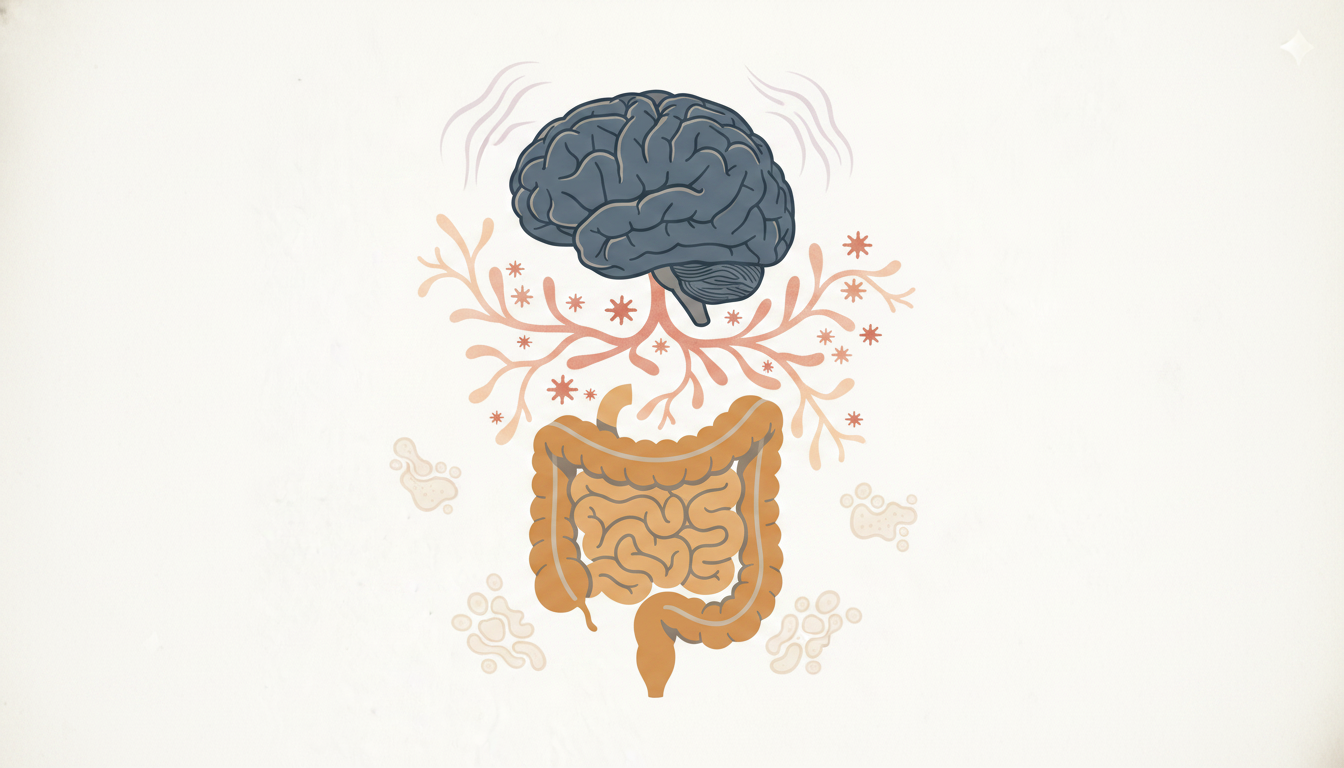
Most practitioners know to look for gut-brain axis dysfunction when a patient presents with brain fog and fatigue. What gets missed is the patient whose neuroinflammation has nothing to do with intestinal permeability — whose driver is a traumatic brain injury from fifteen years ago, a resolved viral infection, or a systemic autoimmune condition that has been active for years. The clinical picture looks the same. The mechanism is entirely different. The Kharrazian Institute's advanced neurology training addresses exactly this problem: teaching practitioners to distinguish between neuroinflammation pathways so that clinical strategies can be matched to the actual driver, not just the symptom cluster.
Dr. Datis Kharrazian's coursework synthesizes research across neuroimmunology, functional medicine, and clinical neuroscience to give practitioners a structured sequence of thought for neuroinflammation assessment — one that can be implemented in practice immediately.
Symptom Recognition for Neuroinflammation Assessment
Neuroinflammation rarely announces itself clearly. Patients describe it in the language of daily life: they can't think straight, they're exhausted after minimal cognitive effort, they can't tolerate crowded rooms or loud environments. These complaints get attributed to stress, sleep issues, or mood disorders. They get medicated for the symptom rather than investigated for the mechanism.
The symptom profile that should prompt neuroinflammation assessment includes brain fog, impaired concentration, poor memory and recall, disproportionate fatigue, and sensory sensitivity to noise, light, or crowds. None of these symptoms are unique to neuroinflammation, which is exactly why clinical pattern recognition matters. When multiple symptoms cluster together, especially in a patient with a relevant history, the probability of an active neuroinflammatory process increases substantially.
Associated diagnoses add another layer of signal. Chronic depression that has not responded to standard treatment, chronic fatigue syndrome where cognitive exertion specifically triggers exhaustion, post-concussion syndrome, post-traumatic stress disorder, and chronic pain syndromes where pain is diffuse and non-localizable — all of these carry neuroinflammatory mechanisms in the research literature. Dr. Kharrazian's clinical training teaches practitioners to recognize these diagnoses not as endpoints but as indicators that neuroinflammation may be the underlying condition requiring direct assessment.
Patient History: The Most Underused Neuroinflammation Assessment Tool
Serum markers and imaging capture a moment in time. Patient history captures the trajectory — and in neuroinflammatory conditions, the trajectory is often the diagnosis.
Research in neuroimmunology shows that prior insults to the central nervous system can prime microglial activation that persists long after the original event has resolved. A single traumatic brain injury can establish a neuroinflammatory state that remains subclinical for years before becoming symptomatic. Vascular insults, including transient ischemic events that were never formally diagnosed, carry the same priming potential. Infections — particularly viral — are well-documented in neuroimmunology research as initiating events for chronic neuroinflammatory conditions.
This means a thorough intake for any patient presenting with cognitive or neurological symptoms needs to specifically ask about head injuries at any point in their life, prior infections with prolonged recovery, cardiovascular events, and the timeline of when current symptoms began relative to those events. The patient may not connect a concussion from a car accident twelve years ago to their current inability to concentrate. The practitioner has to make that connection by asking the right questions.
Systemic inflammatory conditions compound neuroinflammation through overlapping immune mechanisms. Autoimmune diseases, chronic inflammatory bowel conditions, and unresolved infections can maintain peripheral immune activation that crosses into central nervous system inflammation. Dr. Kharrazian's coursework emphasizes evaluating for these systemic conditions as part of every neuroinflammation workup, not as separate investigations.
How Mitochondrial Dysfunction Drives Neuroinflammation
Neuroinflammation and mitochondrial dysfunction are not parallel problems — they are cyclically reinforcing. Microglial activation increases oxidative stress. Oxidative stress impairs mitochondrial electron transport chain function. Impaired mitochondria produce less ATP and generate more reactive oxygen species, which sustains microglial activation. The loop continues without external intervention.
Research in neuroenergetics shows that the brain's extraordinary metabolic demands make it uniquely vulnerable to mitochondrial compromise. When ATP production drops, virtually every energy-dependent neurological process degrades — neurotransmitter synthesis, synaptic transmission, axonal transport, and the maintenance of membrane potentials. This is the metabolic substrate beneath what patients describe as brain fog.
Clinical strategies targeting mitochondrial bioenergetics in neuroinflammatory conditions have two primary directions in Dr. Kharrazian's teaching. The first is nutritional optimization — ensuring micronutrient sufficiency for the cofactors required in oxidative phosphorylation, including B vitamins, magnesium, CoQ10, and alpha-lipoic acid. The second is metabolic: research on ketogenic diets and intermittent fasting shows measurable effects on brain energy metabolism, mitochondrial biogenesis, and reduction of neuroinflammatory markers. These are not fringe interventions. They are evidence-based strategies with mechanistic explanations grounded in metabolic neuroscience.
Nutraceutical Strategies That Cross the Blood-Brain Barrier
Peripheral supplementation does not automatically translate to central nervous system effects. Blood-brain barrier penetrance is a prerequisite for any nutraceutical intervention targeting neuroinflammation directly, and this distinction is fundamental to building protocols that actually work.
The research synthesized in Dr. Kharrazian's coursework identifies several compounds with documented blood-brain barrier penetrance and evidence for direct effects on neuroinflammatory mechanisms. Magnesium's role in NMDA receptor modulation affects excitotoxicity, which is a primary driver of neuroinflammatory cascades. GABAergic support through compounds such as valerian root and passionflower addresses the dysregulated neuronal excitability that both results from and sustains neuroinflammation. Sleep architecture disruption in neuroinflammatory conditions is not incidental — slow-wave sleep is the primary period of glymphatic clearance, the brain's mechanism for clearing metabolic waste including neuroinflammatory byproducts. Addressing sleep as a direct neuroinflammatory intervention, rather than a secondary quality-of-life concern, reflects a mechanistic understanding of brain physiology.
Neurological Rehabilitation Without Exacerbation
The rehabilitative error in neuroinflammatory conditions is predictable: practitioners push too hard, patients crash, and recovery stalls. The inflamed brain has a reduced neuroplasticity ceiling. Rehabilitation demands calibration against that ceiling, not against what the patient could tolerate before the neuroinflammatory state was established.
Research in neurorehabilitation supports a graduated challenge model — introducing cognitive or sensorimotor tasks that require neurological engagement without triggering a post-exertional symptom flare. The therapeutic window in neuroinflammatory conditions is narrower than in standard neurological rehabilitation. Dr. Kharrazian's training addresses how to identify that window clinically and how to progress patients through it systematically, improving neurological connectivity and plasticity over time rather than attempting aggressive rehabilitation that exceeds the patient's current neurological capacity.
Post-concussion syndrome is an instructive example. The research shows that early return-to-activity protocols that ignore ongoing neuroinflammation consistently produce worse long-term outcomes than graduated protocols that account for the neuroinflammatory state. The same principle applies to chronic fatigue patients where cognitive exertion reliably triggers exhaustion — the exhaustion is a signal from the nervous system about its current metabolic ceiling, not a psychological barrier to overcome.
Pain Modulation and Descending Inhibitory Pathway Dysfunction
Chronic pain in neuroinflammatory patients frequently lacks a localizable peripheral source because the problem is central, not peripheral. Descending pain inhibitory pathways originating in the periaqueductal gray and rostral ventromedial medulla normally modulate nociceptive signals before they reach conscious processing. Neuroinflammation compromises these pathways. The result is central sensitization — diffuse pain, heightened sensitivity to stimuli that would not normally be painful, and pain that does not respond to interventions targeting peripheral tissue.
Research in pain neuroscience shows that sympathetic nervous system dysregulation compounds this problem by sustaining elevated catecholamine levels that lower the pain threshold further. Clinical strategies that address sympathetic tone — including specific sensorimotor rehabilitation approaches that activate parasympathetic pathways — are therefore relevant to pain management in these patients, not just to autonomic function.
Dr. Kharrazian's clinical teaching identifies sensory pathway activation as one mechanism for engaging pain inhibition centers in the brain. This approach treats the descending inhibitory system as a rehabilitative target rather than a passive participant in the pain response. For practitioners working with complex chronic pain patients who have failed conventional pain management, this neuroinflammation-based perspective offers a clinically actionable sequence of thought.
Key Takeaways for Practitioners
- Neuroinflammation assessment requires distinguishing between drivers: prior head trauma, infections, vascular events, and systemic autoimmune conditions each prime neuroinflammation through distinct mechanisms and need to be identified in patient history.
- Symptoms including brain fog, post-exertional cognitive exhaustion, sensory sensitivity, and non-localizable chronic pain are functional indicators of neuroinflammatory processes, not standalone diagnoses.
- Mitochondrial dysfunction and neuroinflammation are mutually reinforcing. Addressing brain bioenergetics — through nutritional support, ketogenic or fasting protocols, and targeted nutraceuticals — is a direct neuroinflammatory intervention.
- Blood-brain barrier penetrance is a prerequisite for nutraceutical protocols targeting neuroinflammation. Peripheral effects do not guarantee central nervous system effects.
- Descending pain inhibitory pathway dysfunction in neuroinflammatory states explains central sensitization. Rehabilitative strategies targeting sympathetic tone and sensory pathway activation address the central mechanism rather than peripheral tissue.
Frequently Asked Questions
Brain fog, disproportionate fatigue after cognitive effort, impaired memory, and sensory sensitivity to noise or crowds are the most consistent functional indicators. These symptoms clustered with a history of head trauma, infection, or systemic autoimmune disease significantly raise the probability of an active neuroinflammatory process.
Traumatic brain injury can prime microglial activation that persists after the acute injury resolves. Research in neuroimmunology shows this primed state can remain subclinical for years before becoming symptomatic, making thorough intake history essential for any patient presenting with unexplained cognitive or neurological symptoms.
Chronic pain in neuroinflammation is frequently central rather than peripheral. Neuroinflammation compromises descending pain inhibitory pathways, producing central sensitization. Interventions targeting peripheral tissue do not address this mechanism. Clinical strategies need to target the central nervous system's pain modulation systems directly.
Research in metabolic neuroscience shows ketogenic diets improve brain energy metabolism and support mitochondrial biogenesis. Since neuroinflammation and mitochondrial dysfunction are mutually reinforcing, metabolic interventions that break that cycle have direct neuroinflammatory relevance, not just metabolic relevance.
The neuroinflamed brain has a reduced neuroplasticity ceiling. Rehabilitation must be calibrated to that reduced capacity using a graduated challenge model, introducing cognitive or sensorimotor demands incrementally. Exceeding the patient's current neurological tolerance consistently produces worse long-term outcomes than a slower, systematic approach.
About the Author
Dr. Datis Kharrazian, PhD, DHSc, DC, MS, MMSc, FACN is a Harvard Medical School research fellow and researcher at Massachusetts General Hospital's Department of Neurology specializing in autoimmunity and neuroimmunology. He serves as Associate Clinical Professor at Loma Linda University School of Medicine and is the author of Why Do I Still Have Thyroid Symptoms When My Lab Tests Are Normal and Why Isn't My Brain Working. He holds fellowships from the American College of Nutrition and the Royal Society of Medicine (UK), the Diplomate of the Board of Nutrition Specialists designation, and is a member of the American Association of Immunologists. The Kharrazian Institute serves more than 5,000 physicians and healthcare providers worldwide.
Advance Your Neuroinflammation Clinical Training
The Kharrazian Institute offers advanced coursework in neuroinflammation assessment and clinical application. These courses are designed for licensed healthcare practitioners and provide evidence-based protocols that can be implemented in practice immediately. Learn more about current KI neurology courses at kharrazianinstitute.com.