Most practitioners order TSH and call it a day. When it comes back normal, the patient is told their thyroid is fine — even when they have every clinical sign of Hashimoto's thyroiditis. The problem is not that the test is wrong. The problem is that TSH alone cannot confirm or rule out autoimmune thyroid disease. Laboratory testing for Hashimoto's diagnosis requires a specific antibody panel, careful interpretation of reference ranges, and clinical awareness of what the numbers do not show. Dr. Datis Kharrazian's coursework at the Kharrazian Institute addresses this gap directly, teaching practitioners a more complete approach to thyroid autoimmunity testing.
Why TPO Antibodies Are the Primary Marker for Hashimoto's Diagnosis
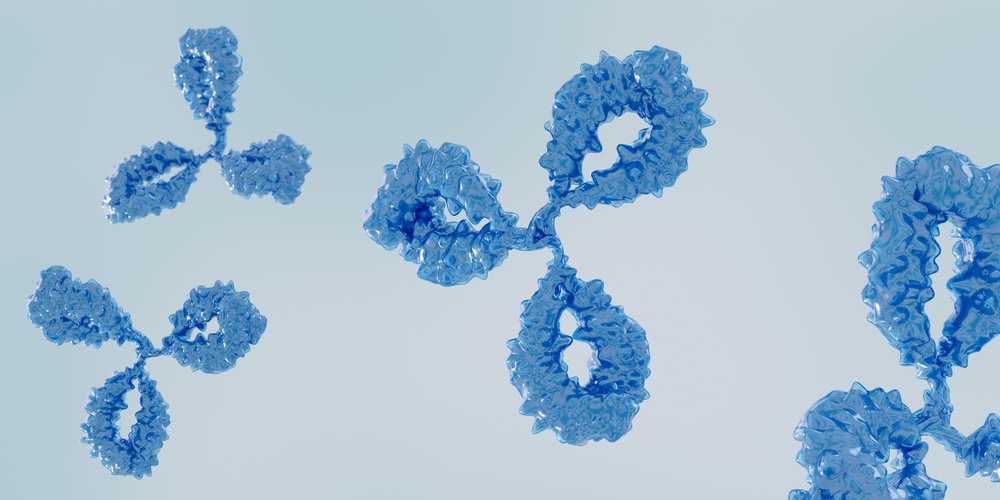
Thyroid peroxidase (TPO) antibodies appear in approximately 95% of patients with Hashimoto's thyroiditis and are rarely elevated in healthy individuals. That combination — high sensitivity, low false-positive rate — makes TPO antibodies the most clinically useful serological marker for confirming autoimmune thyroid disease.
Elevated TPO antibodies above the laboratory reference range indicate that an immune attack on thyroid tissue is occurring. Ordering the test is straightforward. Interpreting it correctly is where clinical judgment matters.
Two critical details practitioners routinely overlook:
- Reference range variation between labs. TPO antibody testing methodology is not standardized across laboratories. A result of 35 IU/mL at one lab may not be directly comparable to the same number at another. Patients should be monitored at the same laboratory over time to track meaningful trends.
- Antibody levels do not directly correlate with tissue destruction. A patient with very high TPO antibodies may have a relatively weak T-cell response and less thyroid damage than a patient with moderately elevated antibodies and robust cellular immunity. Antibody levels tell you that autoimmunity is present. They do not tell you how aggressively the tissue is being destroyed.
This second point is one Dr. Kharrazian's clinical training emphasizes consistently. Practitioners who treat the antibody number as a direct proxy for disease severity will misread their patients.
The Role of Thyroglobulin Antibodies in Thyroid Autoimmunity Testing
Thyroglobulin antibodies (TgAb) appear in roughly 60 to 80% of Hashimoto's patients, making them less sensitive than TPO antibodies as a standalone marker. They are not the first test to order, but they are not optional when clinical suspicion remains high.
When both TPO and thyroglobulin antibodies are elevated, the probability of autoimmune thyroid disease increases substantially. The presence of two distinct autoantibodies targeting separate thyroid proteins indicates a broader immune response against thyroid tissue, not an isolated reaction. Research in autoimmune thyroidology supports using both markers together rather than defaulting to TPO alone.
Thyroglobulin antibodies also matter when TPO results are borderline or equivocal. A patient with low-positive TPO and elevated TgAb warrants the same clinical attention as one with clearly elevated TPO. The combination paints a fuller picture than either marker in isolation.
How TSH Fits Into Hashimoto's Laboratory Assessment
TSH measures pituitary output in response to thyroid hormone levels. It remains the primary tool for diagnosing and monitoring hypothyroidism. What it does not do is detect autoimmunity.
A patient can have elevated TPO and thyroglobulin antibodies with a completely normal TSH. This reflects autoimmune activity against thyroid tissue that has not yet progressed to measurable hypothyroidism. The immune attack is underway; the thyroid is compensating. At this stage, patients often present with clear clinical symptoms — fatigue, cognitive slowing, hair loss, temperature dysregulation — while every standard thyroid panel comes back normal.
That clinical gap is where the Hashimoto's diagnosis gets missed most often.
TSH does have a defined role in this population. Once autoimmunity is confirmed via antibody testing, TSH monitoring tracks whether the disease is progressing toward hypothyroidism, and whether thyroid hormone replacement is indicated and appropriately dosed. The mistake is using it as the entry point for diagnosing Hashimoto's. TSH is a downstream marker. Antibody testing is where laboratory assessment for Hashimoto's diagnosis begins.
Beyond the Standard Panel: Extended Thyroid Function Assessment
TSH, free T4, and free T3 represent standard thyroid function testing. For patients with Hashimoto's thyroiditis, that panel often leaves clinical questions unanswered.
Reverse T3 (rT3) is produced when the body converts T4 into an inactive form rather than the active T3. Elevated reverse T3 can occur in the context of chronic illness, inflammatory states, adrenal dysfunction, or caloric restriction. When a Hashimoto's patient presents with persistent hypothyroid symptoms despite normalized TSH and free T3, reverse T3 may explain the discrepancy. Research in thyroid metabolism demonstrates that elevated rT3 competes with active T3 at receptor sites, functionally reducing thyroid hormone effect even when serum levels appear adequate.
Thyroid binding globulin (TBG) assessment is also relevant. TBG is the primary transport protein for thyroid hormones. Elevated TBG, common with oral estrogen use, reduces free hormone availability. Decreased TBG, seen with androgens or nephrotic syndrome, increases free hormone levels. Standard panels measuring total T4 and total T3 without accounting for binding globulin status can produce misleading results in affected patients.
Dr. Kharrazian's coursework integrates these extended markers into a complete clinical strategy, teaching practitioners when to go beyond the standard panel and how to interpret results in the context of autoimmune thyroid disease specifically.
Antibody Fluctuations and Environmental Triggers
TPO and thyroglobulin antibody levels are not static. They fluctuate in response to immune system activity, and that activity is influenced by identifiable triggers.
Gluten exposure in genetically susceptible individuals is one of the most clinically documented drivers of TPO antibody elevation. Research in autoimmune thyroid disease has demonstrated that molecular mimicry between gliadin peptides and thyroid tissue antigens can amplify the existing immune attack. Intestinal permeability, which often accompanies gluten sensitivity, allows immune-activating antigens into systemic circulation and compounds the problem.
Other documented triggers include iodine excess, environmental toxin exposure, infections — particularly with Yersinia enterocolitica and Epstein-Barr virus — and significant physiological stressors. When a patient's antibody levels spike between visits without an obvious clinical explanation, a methodical review of recent exposures is warranted before attributing the change to disease progression.
Tracking antibody trends over time at the same laboratory, rather than treating any single result in isolation, gives practitioners the most clinically actionable data.
Hashimoto's Rarely Travels Alone: Screening for Coexisting Autoimmunity
Autoimmune diseases cluster. A patient diagnosed with Hashimoto's thyroiditis has a statistically elevated risk of harboring additional autoimmune conditions, whether symptomatic or subclinical. Research in autoimmunology consistently shows that shared genetic susceptibility, immune dysregulation, and intestinal permeability create conditions in which multiple autoimmune processes develop concurrently.
Common coexisting conditions in Hashimoto's patients include celiac disease, type 1 diabetes, rheumatoid arthritis, systemic lupus erythematosus, pernicious anemia, and Addison's disease. Each carries its own antibody profile. Once Hashimoto's thyroiditis is confirmed, screening for additional autoimmune activity is not excessive — it is appropriate clinical practice.
Dr. Kharrazian's clinical training teaches practitioners to treat Hashimoto's diagnosis not as an endpoint, but as a signal to look further. The first confirmed autoimmunity is frequently the most visible piece of a larger immune dysregulation pattern. Identifying additional autoimmune activity early changes the clinical strategy, often significantly.
Key Takeaways for Practitioners
- TPO antibodies are present in approximately 95% of Hashimoto's patients and are the primary serological marker for confirming autoimmune thyroid disease.
- Thyroglobulin antibodies are less sensitive but clinically important — the presence of both antibodies significantly increases diagnostic confidence.
- Normal TSH does not rule out Hashimoto's thyroiditis. Autoimmunity can be active and symptomatic before TSH shifts.
- Reverse T3 and thyroid binding globulin assessment extend clinical utility beyond the standard panel when patients remain symptomatic despite normalized TSH.
- A confirmed Hashimoto's diagnosis warrants screening for coexisting autoimmune conditions, not just thyroid monitoring.
Frequently Asked Questions
Yes. A small percentage of Hashimoto's patients are seronegative for TPO antibodies. In these cases, elevated thyroglobulin antibodies, clinical symptoms, and ultrasound findings showing characteristic thyroid tissue changes support diagnosis. Antibody-negative Hashimoto's is real but uncommon.
Clinical practice varies, but monitoring every 6 to 12 months at the same laboratory allows practitioners to track meaningful trends. More frequent testing is appropriate when patients report significant symptom changes or known exposure to documented autoimmune triggers.
Declining antibody levels indicate reduced immune activity against thyroid tissue, which is clinically meaningful. Whether that reflects true remission, thyroid tissue depletion, or successful intervention depends on the full clinical picture. Antibody trends inform the strategy; they do not replace it.
TPO antibody assays are not standardized across laboratories. Different methodologies produce different numerical results for the same sample. Comparing results across laboratories introduces variability that can obscure real clinical trends or create false alarms. Consistent laboratory use is essential for accurate longitudinal tracking.
Elevated reverse T3 competes with active T3 at thyroid hormone receptors, reducing functional hormone effect even when serum T3 appears adequate. In Hashimoto's patients with persistent symptoms and normalized TSH, elevated reverse T3 is a clinically important finding that warrants investigation of inflammatory burden, adrenal function, and caloric status.
About the Author
Dr. Datis Kharrazian, PhD, DHSc, DC, MS, MMSc, FACN is a Harvard Medical School research fellow and researcher at Massachusetts General Hospital's Department of Neurology specializing in autoimmunity and neuroimmunology. He serves as Associate Clinical Professor at Loma Linda University School of Medicine and is the author of Why Do I Still Have Thyroid Symptoms When My Lab Tests Are Normal and Why Isn't My Brain Working. Dr. Kharrazian is a Fellow of the American College of Nutrition, a Diplomate of the Board of Nutrition Specialists, a member of the American Association of Immunologists, and a Fellow of the Royal Society of Medicine (UK). The Kharrazian Institute serves more than 5,000 physicians and healthcare providers worldwide.
Advance Your Clinical Skills in Thyroid Autoimmunity
The Kharrazian Institute offers advanced clinical training in thyroid autoimmunity, laboratory interpretation, and evidence-based protocols for complex Hashimoto's cases. Courses are designed for healthcare practitioners who work with patients who cannot recover on standard protocols.